Entrepreneurship In Mexico

Entrepreneurship In Mexico

Entrepreneurship in Mexico has experienced significant growth in recent years, fueled by a combination of a youthful population, increasing access to technology, and a growing support network for startups. Mexico’s young and dynamic workforce, with a median age of around 29, brings a fresh perspective and a willingness to embrace innovation. This demographic advantage is complemented by the country’s improving technological infrastructure, which has made digital tools and platforms more accessible. As a result, entrepreneurs in Mexico are increasingly leveraging technology to create innovative solutions in sectors such as fintech, e-commerce, and health tech.

The Mexican government has also played a crucial role in fostering entrepreneurship by implementing various policies and initiatives aimed at supporting small and medium-sized enterprises (SMEs). Programs like the National Institute of the Entrepreneur (El Instituto Nacional del Emprendedor INADEM) and the establishment of technology parks and business incubators have provided essential resources and funding to budding entrepreneurs. Additionally, the rise of venture capital firms and angel investors in Mexico has created a more vibrant ecosystem, enabling startups to secure the necessary financial backing to scale their operations.

Looking to the future, the prospects for entrepreneurship in Mexico appear promising. The continued expansion of internet connectivity and the increasing adoption of smartphones are expected to further drive digital entrepreneurship. Moreover, the growing emphasis on sustainable development and social impact is likely to lead to the emergence of startups focused on addressing environmental and societal challenges. As Mexico continues to integrate more deeply into the global economy, the country’s entrepreneurs will have greater opportunities to collaborate with international partners, access new markets, and bring their innovative solutions to a wider audience.

However, challenges remain. Entrepreneurs in Mexico still face hurdles such as bureaucratic red tape, limited access to credit, and occasional political and economic instability. To sustain and accelerate the growth of entrepreneurship, it will be essential for both the public and private sectors to continue working together to create an enabling environment. This includes streamlining regulatory processes, improving access to financing, and investing in education and skills development to prepare the next generation of entrepreneurs. With the right support and a continued focus on innovation, entrepreneurship in Mexico is poised to thrive and contribute significantly to the country’s economic development.
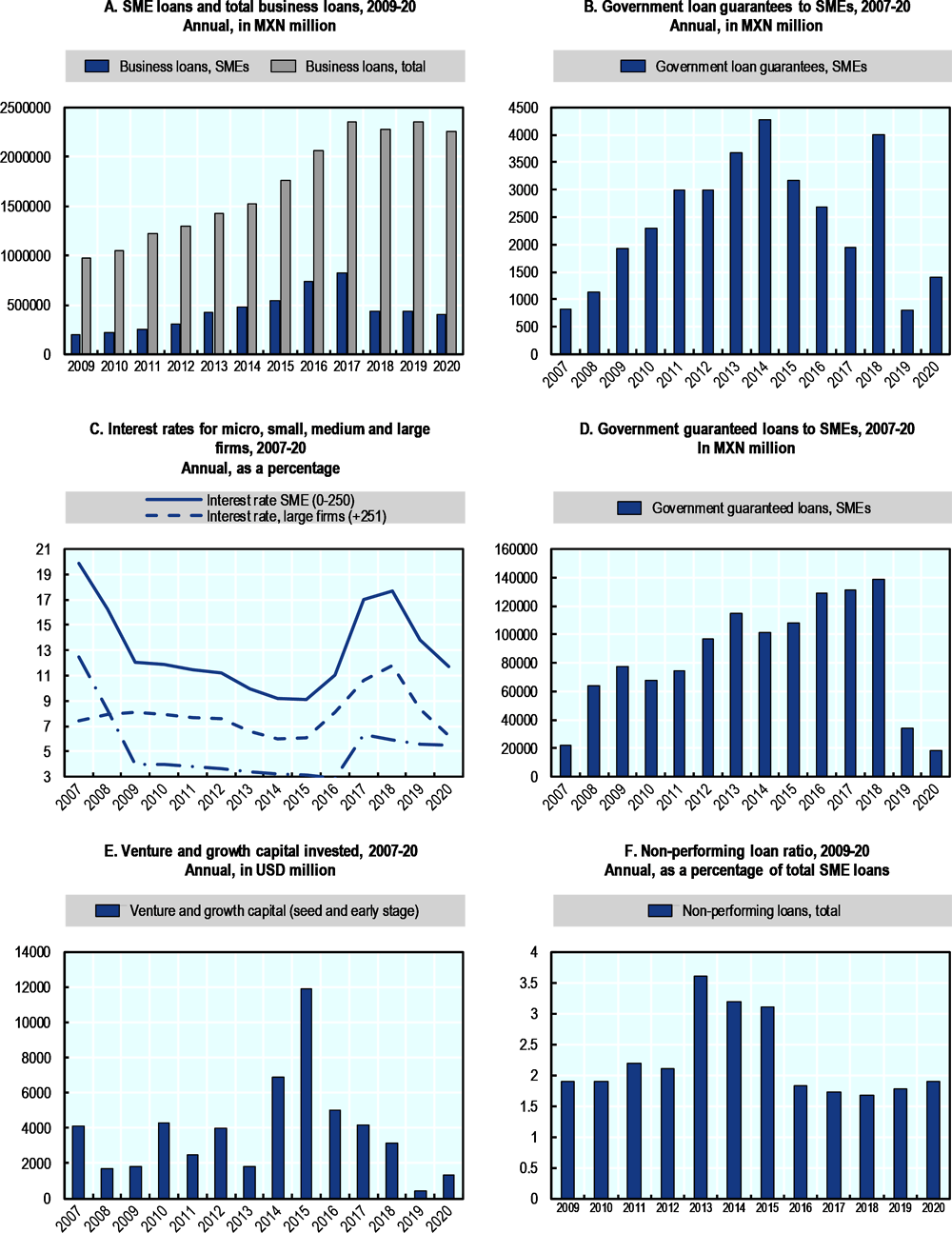
The Mexican government has developed a variety of resources and programs aimed at supporting entrepreneurship and fostering a conducive environment for startups and small businesses. Some of the key initiatives include:

  1. Instituto Nacional del Emprendedor (INADEM):
    • INADEM was established to promote and support entrepreneurship and innovation. It offers financial support, training, and resources to startups and small businesses.
    • The institute runs various programs such as the Seed Capital Program, which provides funding for new ventures, and the Entrepreneurial Ecosystem Support Program, which focuses on creating a supportive environment for entrepreneurs.
  2. Fondo Nacional de Apoyo para las Empresas en Solidaridad (FONAES):
    • FONAES provides financial assistance and advisory services to socially-oriented businesses and cooperatives, particularly in rural and marginalized areas.
    • The fund aims to boost economic development and create job opportunities by supporting community-based enterprises.
  3. ProMéxico:
    • Although primarily focused on promoting international trade and investment, ProMéxico also supports entrepreneurs by providing access to global markets and facilitating international partnerships.
    • ProMéxico offers training programs, trade missions, and networking opportunities to help Mexican businesses expand globally.
  4. Fondo de Innovación Tecnológica (FIT):
    • Managed by the National Council of Science and Technology (CONACYT), FIT provides grants and funding to support technological innovation and research and development (R&D) projects.
    • The fund targets high-impact projects that can drive economic growth and competitiveness.
  5. Red de Apoyo al Emprendedor (RAE):
    • RAE is a network that connects entrepreneurs with a range of services and resources, including mentoring, training, and funding opportunities.
    • The network comprises various stakeholders, including government agencies, private sector entities, and academic institutions, working together to support entrepreneurial ventures.
  6. Startup México:
    • Startup México is an initiative that provides incubation and acceleration programs for startups. It offers co-working spaces, mentorship, and access to a network of investors and industry experts.
    • The program focuses on fostering innovation and helping startups scale their businesses.
  7. National Entrepreneur Fund (Fondo Nacional Emprendedor):
    • This fund provides financial support to micro, small, and medium-sized enterprises (MSMEs) to promote innovation, productivity, and competitiveness.
    • The fund offers various grants and subsidies to support business development, technological adoption, and market expansion.
  8. TiendaNube and other E-commerce Support Programs:
    • In collaboration with various platforms like TiendaNube, the government supports SMEs in setting up and managing online stores, thereby helping them tap into the growing e-commerce market.
    • These programs often include training in digital marketing, logistics, and customer service.

These programs and resources reflect the Mexican government’s commitment to fostering a vibrant entrepreneurial ecosystem. By providing financial support, training, and access to networks and markets, these initiatives aim to empower entrepreneurs, drive innovation, and contribute to the country’s economic growth.

For more information about Investing and Entrepreneurship in Mexico sign up to for our Newsletter.
Also Join Our Investors and Entrepreneurs – Mexico Community on Facebook, with over 3,000 members, and our Financial Liberties in Mexico FaceBook page.

Financial Liberties in Mexico Newsletter This is your premier source for the latest insights and trends in the Mexican financial landscape. Whether you’re an investor, entrepreneur, or simply interested in the economic opportunities in Mexico, our newsletter provides you with the essential information you need to navigate this dynamic market with confidence.  Get Economic Insights About Mexico, Banking Updates, Stock Market Analysis, Real Estate Opportunities, Entrepreneurship and Innovation. Once you complete the purchase, you will be able to download the General Intro To The Financial Liberties Newsletter, this PDF file contains an overview of what subscribers can expect from our Newsletter.  You will then be added to the subscriber email list and start receiving the newsletter by email, or be given access to a private Google Drive folder where you can download the newsletters and special reports included with this purchase.  Disclaimer:  Please read the full Disclaimer in our Terms of Service Page The content provided by Financial Liberties and in our Newsletter, Special Reports, Webinars, and Consutling is for informational and educational purposes only and does not constitute financial, investment, legal, or other professional advice. Financial Liberties and operators are not financial advisors, and the content on this site and our media outlets should not be considered a substitute for professional financial advice tailored to your specific circumstances. Always seek the advice of a qualified financial advisor with any questions you may have regarding financial decisions. Financial Liberties, its affiliates, and their respective directors, officers, employees, agents, and representatives are not liable for any loss or damage arising from your reliance on the information provided. This includes, but is not limited to, any direct, indirect, incidental, punitive, or consequential damages. You acknowledge that by subscribing to this Newsletter and other media we provide as a part of your subscription, you will use the information at your own risk and we are only sharing our research for educational purposes.
The Financial Literacy Gap Between Men and Women

The Financial Literacy Gap Between Men and Women

In today’s fast-paced world, financial literacy is more critical than ever. Yet, there’s a significant gap in financial literacy between men and women. Understanding the reasons behind this gap and how we can bridge it is essential for promoting financial equality and empowerment.

Understanding the Financial Literacy Gap

The financial literacy gap between men and women is influenced by various factors, including societal norms, educational opportunities, and confidence levels. Historically, men have been more likely to be in charge of financial decisions, both in households and in business settings. This trend has contributed to a lingering perception that finance is a male-dominated field. As a result, many women may feel less confident in their financial knowledge and decision-making abilities.

Societal and Cultural Influences

Societal norms and cultural influences play a significant role in shaping attitudes toward money and finance. From a young age, boys and girls often receive different messages about money management. Boys might be encouraged to take risks and learn about investments, while girls might be directed toward saving and budgeting. These early experiences can have long-lasting impacts on financial behavior and confidence.

Educational Opportunities

Educational opportunities also contribute to the financial literacy gap. In many schools, personal finance education is not a mandatory part of the curriculum. When financial education is available, it may not be equally emphasized for both genders. Additionally, women who pursue higher education in fields unrelated to finance may miss out on critical financial literacy skills that are more commonly taught in business and economics programs.

Confidence and Perception

Confidence plays a crucial role in financial literacy. Studies have shown that even when women possess financial knowledge, they may lack confidence in their abilities compared to men. This lack of confidence can deter women from making informed financial decisions or seeking out further education on the topic. Moreover, the financial industry itself can sometimes appear intimidating or unwelcoming to women, reinforcing these confidence issues.

The Importance of Closing the Gap

Closing the financial literacy gap is vital for several reasons. Financial literacy empowers individuals to make informed decisions about their money, investments, and future. For women, increased financial literacy can lead to greater financial independence, security, and the ability to achieve personal and professional goals. It also contributes to overall economic stability and growth, as financially literate individuals are better equipped to manage their resources effectively.

Taking Action: Financial Education for All

One of the most effective ways to bridge the financial literacy gap is through education. Taking a course in basic personal finance can provide valuable knowledge and skills that are essential for managing money wisely. Such courses typically cover topics like budgeting, saving, investing, and understanding credit. They can also help build confidence by providing a solid foundation of financial knowledge.

Investing in financial education benefits everyone, but it is particularly crucial for women who may have been historically underrepresented in financial discussions. By promoting financial literacy education, we can create a more inclusive and equitable financial landscape where everyone has the opportunity to succeed.

In conclusion, the financial literacy gap between men and women is a multifaceted issue rooted in societal norms, educational disparities, and confidence levels. Addressing this gap requires a concerted effort to promote financial education and empower women with the knowledge and confidence to manage their finances effectively. Taking a course in basic personal finance is a practical and impactful step toward achieving this goal, leading to greater financial independence and security for all.

Large-Cap Vs Small-Cap Profits During Bubbles

Large-Cap Vs Small-Cap Profits During Bubbles

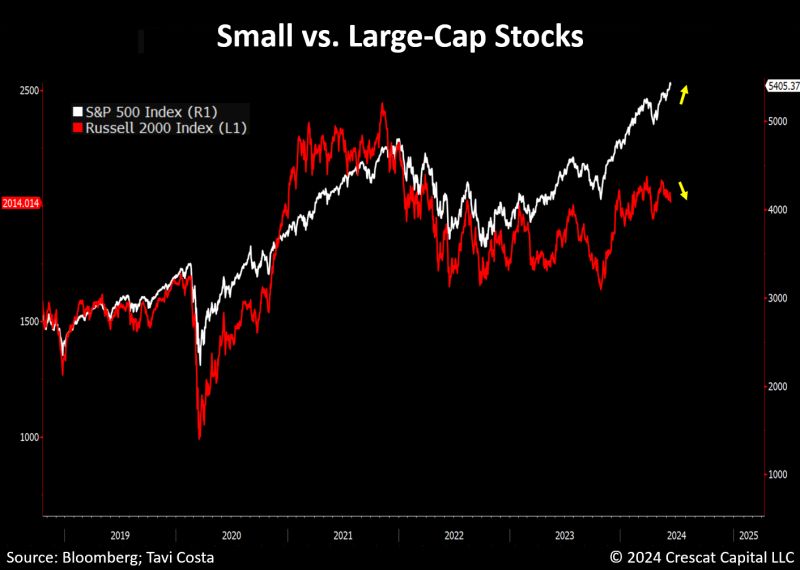
The current gap between small-cap and large-cap stocks does raise some valid concerns about whether they can continue to outperform the rest of the market… or are the large-caps due for a serious correction? Since small-cap stocks are typically more sensitive to economic changes and market sentiment, their underperformance compared to large-cap stocks might indicate that the market is overestimating its strength.

But with so much money floating around, big fund managers have nowhere else to go but large-cap stocks, ie pension fund money can’t speculate in small-cap stocks, so they keep buying up large-cap. For now, it seems like the large-cap stocks are a 1-way directional trade until something serious or a Black Swan breaks the market, which I suspect could happen soon.

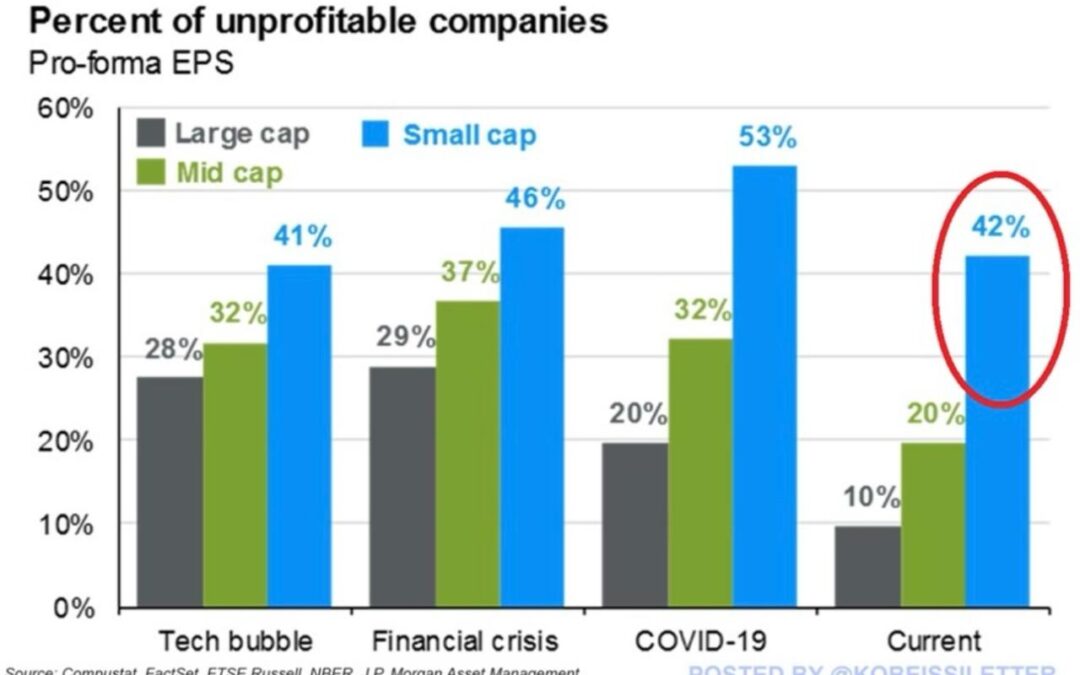
We see that 42% of Small-caps are not profitable,  at the same time 10% of S&P 500 and 20% of Mid-cap stocks aren’t profitable. This can explain why the Russell 2000 is not reaching All Time Highs (ATH),  it’s trading 21% below ATH because of the elevated interest rates.  During the last bubbles, the Tech and Financial crisis had way more unprofitable Large and Mid-cap companies, currently, these are lower than in those times… the small-cap are in line, so this does help explain the current gap between large and small-cap companies and the S&P outperforming.

This coming year will be very volatile and we suspect there could be a Black Swan event at any time and this will send turmoil in the markets, but until that happens, it does look like the S&P will continue to outperform.  It is highly doubtful that the small-caps will start outperforming given the high interest rate environment we are currently in and low economic activity by the average consumer.  The large-cap’s continuous drive higher could be as simple as there is no other option for big money like pension funds or ETF managers to go to, so they continue to buy up the S&P and the big tech companies in them. 

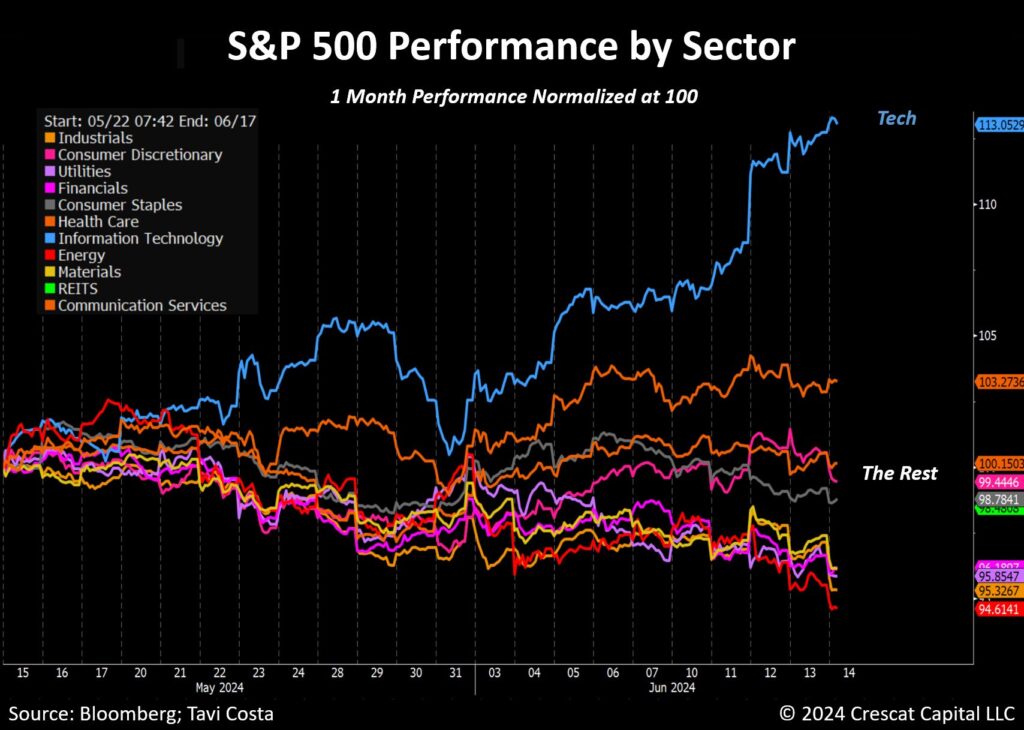
We can clearly see the outperformance in the S&P 500 is from the Infomation Technology sector, the rest just can’t keep up.
So the bull market in the S&P is mostly from a few big-name Tech companies like Nvidia, Apple, Facebook, Google, and a few more.
Without broader participation from all sectors, how long can the S&P Continue to go up???

Monitoring these divergences is crucial, as they can sometimes predict a potential market correction. Persistent struggles in small-cap stocks could suggest that the broader market isn’t as robust as the performance of large-cap stocks might imply.

Although this discrepancy might seem minor now, it’s important to stay aware of these signals to better gauge the market’s overall health and make informed investment decisions. As always, maintaining a well-diversified portfolio that includes both large and small-cap stocks can help mitigate risks during periods of market uncertainty.

End Of The Petrodollar – 50 Years Later

End Of The Petrodollar – 50 Years Later

50 years ago, the US signed a deal with the Saudis to accept USD for their oil… this agreement is coming to an end this Sunday, June 9th, 2024, and thus could be the end of the Petrodollar.

The question is, will the Saudis renew? From all indications, no they will not renew the contract going forward. This means the Saudis are willing to accept other nations’ currencies or Gold as payment, and they are looking to BRICS for alliances.

Yes the US is now a big producer of Oil and Natural Gas, but that’s not enough to sustain the world currency reserve status.  The Saudis and OPEC could easily drop oil prices to $40 a barrel and still make money, US fracking needs a much higher price to be sustainable. The fact is, the Saudis will most likely join BRICS, and their oil (and Russia’s oil) is more than enough to supply all the BRICS nations.  Oil could be used to support and back up the Saudi currency, and the same goes for UAE, which also has joined BRICS recently.


BRICS are moving away from the Dollar and will soon trade amongst themselves in their own country’s currencies, and other assets like GOLD and other commodities.

For 50 years, the USD had a global advantage over all other currencies and they abused it over the last decade, that dominance has given the US an unfair competitive advantage. Nations around the world are dropping the dollar like a hot potato and that trend only accelerates going forward.

I can’t see any reason for the world to stay on the dollar standard as the world currency reserve. The World is moving on and the USD is no longer a strong currency to be a reserve… which is why GOLD will stay strong and in demand during this transition period.

What Was the Petrodollar?

The term “petrodollar” refers to U.S. dollars that are earned by countries through the sale of their oil to other nations. The concept emerged in the early 1970s when the U.S. struck a deal with Saudi Arabia. In exchange for military protection and other security guarantees, Saudi Arabia agreed to sell its oil exclusively in U.S. dollars. Eventually, this arrangement extended to other OPEC (Organization of Petroleum Exporting Countries) nations. This system created a substantial demand for the U.S. dollar since countries needed dollars to buy oil.

Was the Petrodollar Good for the World?

The petrodollar system had several impacts:

Stability and Liquidity: The system provided global financial stability and liquidity. The high demand for U.S. dollars due to oil transactions supported the dollar’s value, reducing currency volatility

Economic Growth: It facilitated economic growth and trade. Countries holding large reserves of U.S. dollars could invest in U.S. assets, fueling global economic integration.

Power Dynamics: It reinforced U.S. economic and geopolitical influence, which could be seen as either beneficial or detrimental depending on the perspective.

Global Imbalances: It contributed to global imbalances, with the U.S. running large trade deficits financed by foreign investments in U.S. assets.

Will We Go Off the Petrodollar Standard?

There is increasing speculation about the end of the petrodollar system due to various factors:

Economic Shifts: The rise of other economic powers like China and the European Union could reduce the dominance of the U.S. dollar.

Alternative Currencies: Some countries are exploring alternative currencies for oil transactions. For example, Russia and China have been conducting some oil trades in rubles and yuan.

Cryptocurrencies and Digital Currencies: The emergence of digital currencies could provide alternatives to traditional currency systems.

Geopolitical Tensions: Rising geopolitical tensions might push some countries to seek alternatives to the U.S. dollar to avoid economic sanctions.

Benefits of Going Off the Petrodollar Standard

Diversification: Diversifying currency reserves could reduce dependency on a single currency, mitigating risks associated with dollar fluctuations.

 Economic Independence: Countries might gain more economic independence, reducing their vulnerability to U.S. economic policies and sanctions.

Enhanced Stability: A more balanced global currency system could potentially lead to greater economic stability.

Better Alternatives to the Petrodollar Standard

Multicurrency System: A system where multiple currencies are used for international trade could reduce reliance on any single currency, promoting global economic stability.

Special Drawing Rights (SDRs): The International Monetary Fund’s (IMF) SDRs could serve as a global reserve asset, providing a more balanced and stable global financial system.

Digital Currencies: Central bank digital currencies (CBDCs) could provide secure and efficient alternatives for international transactions.

Role of Gold in the Petrodollar System

Gold could potentially play several roles:

Store of Value: Gold has historically been a reliable store of value, providing stability in times of economic uncertainty.

Currency Backing: Countries could use gold to back their currencies, enhancing confidence in those currencies.

Diversification: Holding gold as part of currency reserves can diversify assets and reduce reliance on any single currency.

Conclusion

The petrodollar system has been a significant factor in global economics and geopolitics since the 1970s. While it has provided stability and growth, there are increasing discussions about moving away from this system due to shifts in global power, economic interests, and technological advancements. Alternatives like a multicurrency system, SDRs, and digital currencies are being considered. Gold remains a viable asset for diversification and stability in any future financial system.

Got GOLD Yet? If no, and you want to learn more about gold investing, We will be covering gold and commodities extensively in the Financial Liberties Newsletter.  Want to buy physical or digital gold, get our special report on Gold.

Texas Stock Exchange TXSE Coming Soon

Texas Stock Exchange TXSE Coming Soon

The Wild West Of Fintech.

Texas has long embodied a spirit of bold independence and pioneering innovation, rooted in a deep ethos of self-reliance. From its early days as a republic to its contemporary status as a business-friendly powerhouse, the Lone Star State has continuously charted its own course. Reflecting this legacy, a group of enterprising Texan entrepreneurs, led by James Lee and backed by financial heavyweights BlackRock and Citadel Securities, is positioning Dallas and Texas as strategic financial market leaders with the launch of the Texas Stock Exchange (TSXE). Having secured over $100 million in funding from major financial market participants, including BlackRock and Citadel, Lee’s vision is to establish a Texas-based competitor to the NYSE and NASDAQ.

The creation of the Texas Stock Exchange underscores the state’s enduring commitment to innovation and competition, aiming to boost liquidity and transparency in the financial markets while solidifying Texas’ role as a key economic hub.

TSXE To Boost Market Efficiency

A primary objective of the Texas Stock Exchange is to deliver greater liquidity and transparency. By harnessing advanced technologies and data analytics, the TSXE aims to provide more consistent and reliable markets, attracting a diverse array of market participants from institutional investors to retail traders, thereby enhancing overall market depth.

Transparency is crucial in today’s market environment. The TSXE’s strong commitment to transparency seeks to rebuild trust in financial markets, facilitating fairer price discovery and mitigating risks of market manipulation. This ensures a level playing field for all participants.

Why Texas: The Ideal Hub

The decision to base the new exchange in Texas is strategic. The state is renowned for its business-friendly environment and a regulatory framework that encourages innovation and growth. Additionally, Texas’s central location offers logistical advantages, making it an ideal hub for market activities across various U.S. time zones.

The presence of established financial entities such as Fidelity and Schwab in Texas further bolsters the state’s financial ecosystem. These companies can provide valuable synergies and support, aiding in the integration and growth of the new exchange.

TSXE Strategic Advantages

The introduction of the Texas Stock Exchange is poised to benefit the broader financial markets significantly. Increased competition among exchanges can lead to improved services and lower costs for market participants. With BlackRock and Citadel Securities involved, the TSX brings substantial credibility and expertise, which can drive innovation and best practices within the industry.

Moreover, the enhanced liquidity and transparency promised by the TSXE can contribute to more efficient and fair markets. Investors are likely to see better price discovery and reduced risks of market manipulation, creating a healthier trading environment. The TSXE’s commitment to these principles can inspire other exchanges to adopt similar standards, fostering a more robust financial system.

Will the TSXE Overcome Obstacles

Despite promising prospects, the Texas Stock Exchange will face significant challenges. Obtaining regulatory approval from bodies like the SEC will be a critical initial step. The exchange must demonstrate robust compliance frameworks and a commitment to market integrity to gain the trust of regulators and market participants.

Market fragmentation poses another risk. With numerous trading venues available, there is a danger of liquidity being spread too thin, leading to inefficiencies. To avoid this, the new exchange must offer compelling value propositions to attract sufficient volume.

TSXE Future Vision

The Texas Stock Exchange represents a visionary move towards more competitive, transparent, and efficient financial markets. If successful, it could prompt incumbent exchanges to elevate their standards, driving continuous improvement across the industry. For investors, the benefits are clear: enhanced market conditions, potentially lower costs, and innovative trading solutions.

Challenging the dominant NYSE and NASDAQ, the two largest players in the U.S. equities trading market, will be an uphill battle. However, Texas is known for its bold independence and pioneering spirit. The success of the Texas Stock Exchange will depend on navigating regulatory landscapes, building trust, and leveraging the state’s unique strategic advantages. With the support of BlackRock and Citadel Securities, the TSXE is well-positioned to make a significant impact on the financial markets, fostering a more competitive and transparent trading environment.

https://www.reuters.com/markets/us/blackrock-citadel-backed-group-start-new-national-stock-exchange-texas-wsj-2024-06-05/