Being Self Employed In Mexico, With Low Income Tax

Being Self Employed In Mexico, With Low Income Tax

Why Being Self-Employed Under RESICO in Mexico Is a Smart Choice Compared to the U.S. and Canada

If you’re considering self-employment or starting a small business, Mexico’s Régimen Simplificado de Confianza (RESICO) offers one of the most attractive tax environments in North America. Designed to support small business owners and independent workers, RESICO allows individuals earning up to 3.5 million pesos per year (approx. $200,000 USD) to pay income tax rates between just 1% and 2.5% on their gross income.
 

Tax Savings vs. U.S. and Canada

In contrast, self-employed individuals in the United States can pay up to 15.3% in self-employment tax (Social Security and Medicare) before even considering federal or state income taxes. In Canada, self-employed individuals not only face progressive federal and provincial income taxes, but also must pay the entire Canada Pension Plan (CPP) contribution, which can amount to over 10% of income.


Why RESICO Stands Out

  • Ultra-low income tax: Starting at 1%, capped at 2.5%, depending on income.
  • Simple compliance: No complex accounting or costly tax filing — RESICO uses monthly declarations based on actual payments received.
  • No annual return required (for many): If you’re within the RESICO thresholds and meet your monthly obligations, you may not even need to file an annual return.
  • Ideal for freelancers, consultants, small vendors, and digital nomads operating in Mexico.

Employment & Business Flexibility

In a world where remote work and entrepreneurial freedom are growing, RESICO offers a unique path to formalize your income and retain more of your earnings, without the heavy tax burden found in the U.S. or Canada. Whether you’re consulting, freelancing, running a local shop, or selling online, RESICO helps you stay legal, compliant, and financially efficient.

Bottom line: If you’re seeking independence and want to maximize your income, being self-employed under RESICO in Mexico is a tax-smart, low-hassle alternative that can outperform traditional employment models in North America.

If you enjoyed this blog, read the blog about The Benefits of Starting or Buying a Business in Mexico


If you would like to read more about Investing and Entrepreneurship in Mexico, join our Facebook group, which covers various topics of discussion.


We also offer consulting services if you would like to start your journey towards Financial Liberties in Mexico. You can see more about our consulting services on this page.  https://financialliberties.com/product/consulting/
Why Starting or Buying a Business in Mexico Is a Smart Move: Key Benefits and Data

Why Starting or Buying a Business in Mexico Is a Smart Move: Key Benefits and Data

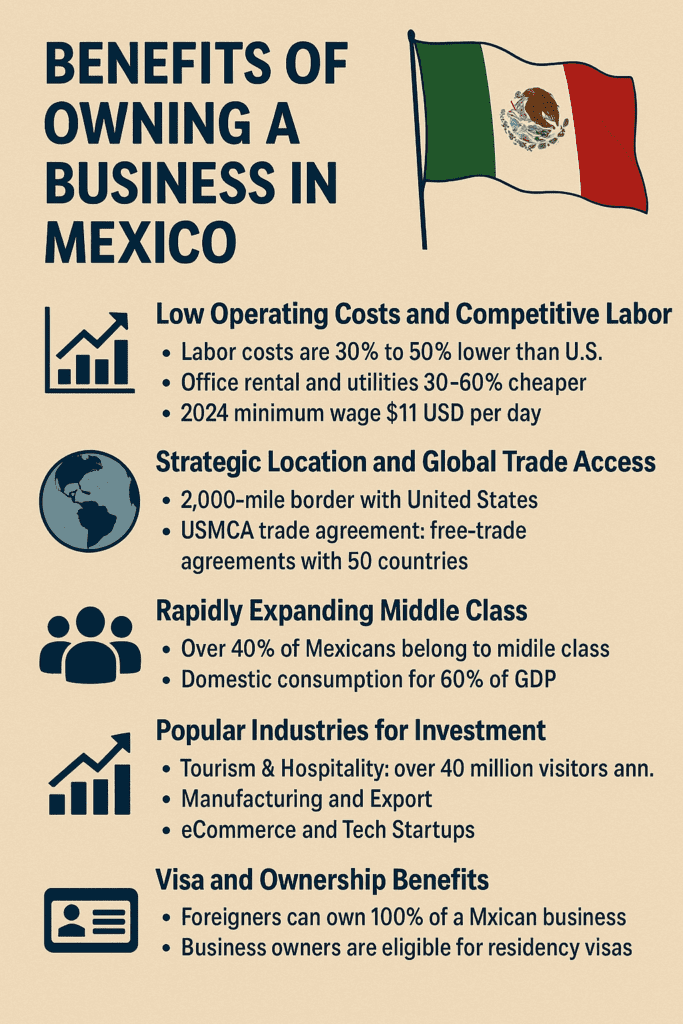
Mexico has emerged as a strategic hotspot for entrepreneurs and investors looking to buy or own businesses. With its proximity to the U.S., favorable trade agreements, low operating costs, and growing consumer market, Mexico offers both stability and high-growth potential. Here’s a data-backed overview of the benefits of owning a business in Mexico:


1. Low Operating Costs and Competitive Labor
Mexico offers a cost-effective business environment compared to many Western nations:
  • Labor costs are significantly lower than in the U.S.—about 30% to 50% less, depending on the sector.
  • Office rental and utility expenses are also 30-60% cheaper than in major U.S. cities.
  • The minimum wage in 2024 was approximately $11 USD per day, although skilled labor earns more, it’s still far more competitive than in developed economies.
2. Strategic Location and Global Trade Access
Mexico provides direct access to both North and South American markets:
  • It shares a 2,000-mile border with the United States, making logistics and distribution fast and affordable.
  • As part of the USMCA trade agreement (formerly NAFTA), businesses in Mexico benefit from duty-free exports to the U.S. and Canada.
  • Mexico also has free trade agreements with 50+ countries, giving it one of the largest trade networks globally.
3. Rapidly Expanding Middle Class
The Mexican middle class is growing and becoming a major force in domestic consumption:
  • According to the OECD, over 40% of Mexicans are now considered middle class.
  • Domestic consumption accounts for around 60% of GDP, creating strong demand for products and services in sectors like food, retail, health, and tech.
4. Popular Industries for Investment
Foreign and local buyers are particularly attracted to industries such as:
  • Tourism and Hospitality – Mexico is the 7th most visited country in the world, drawing over 40 million international tourists annually.
  • Manufacturing and Export – Especially in automotive, aerospace, electronics, and textiles.
  • eCommerce and Tech Startups – A growing fintech and startup scene is drawing global attention and VC funding.
5. Visa and Ownership Benefits
Foreigners can own 100% of a Mexican business, even as a non-resident (except for restricted zones near the coasts and borders which can be held via a trust).
  • Business owners are eligible for temporary or permanent residency visas.
  • Setting up an LLC (S. de R.L. de C.V.) in Mexico is relatively easy and can be done within a few weeks.
Conclusion
With its low costs, access to international markets, and expanding consumer base, buying or owning a business in Mexico offers a strategic opportunity for growth and diversification. Whether you’re looking for a retirement investment, a lifestyle business, or to expand your global footprint, Mexico is well-positioned to deliver strong returns.
I prompted Chat GPT for this article, but would love your comments and thoughts on starting or buying a business in Mexico. Feel free to share your experiences in running a business in Mexico.


Read about Mexico’s low-income tax of 1% – 2.5% for the self-employed.

If you would like to read more about Investing and Entrepreneurship in Mexico, join our Facebook group, which covers various topics of discussion.


We also offer consulting services if you would like to start your journey towards Financial Liberties in Mexico. You can see more about our consulting services on this page.  https://financialliberties.com/product/consulting/
Entrepreneurship In Mexico

Entrepreneurship In Mexico

Entrepreneurship in Mexico has experienced significant growth in recent years, fueled by a combination of a youthful population, increasing access to technology, and a growing support network for startups. Mexico’s young and dynamic workforce, with a median age of around 29, brings a fresh perspective and a willingness to embrace innovation. This demographic advantage is complemented by the country’s improving technological infrastructure, which has made digital tools and platforms more accessible. As a result, entrepreneurs in Mexico are increasingly leveraging technology to create innovative solutions in sectors such as fintech, e-commerce, and health tech.

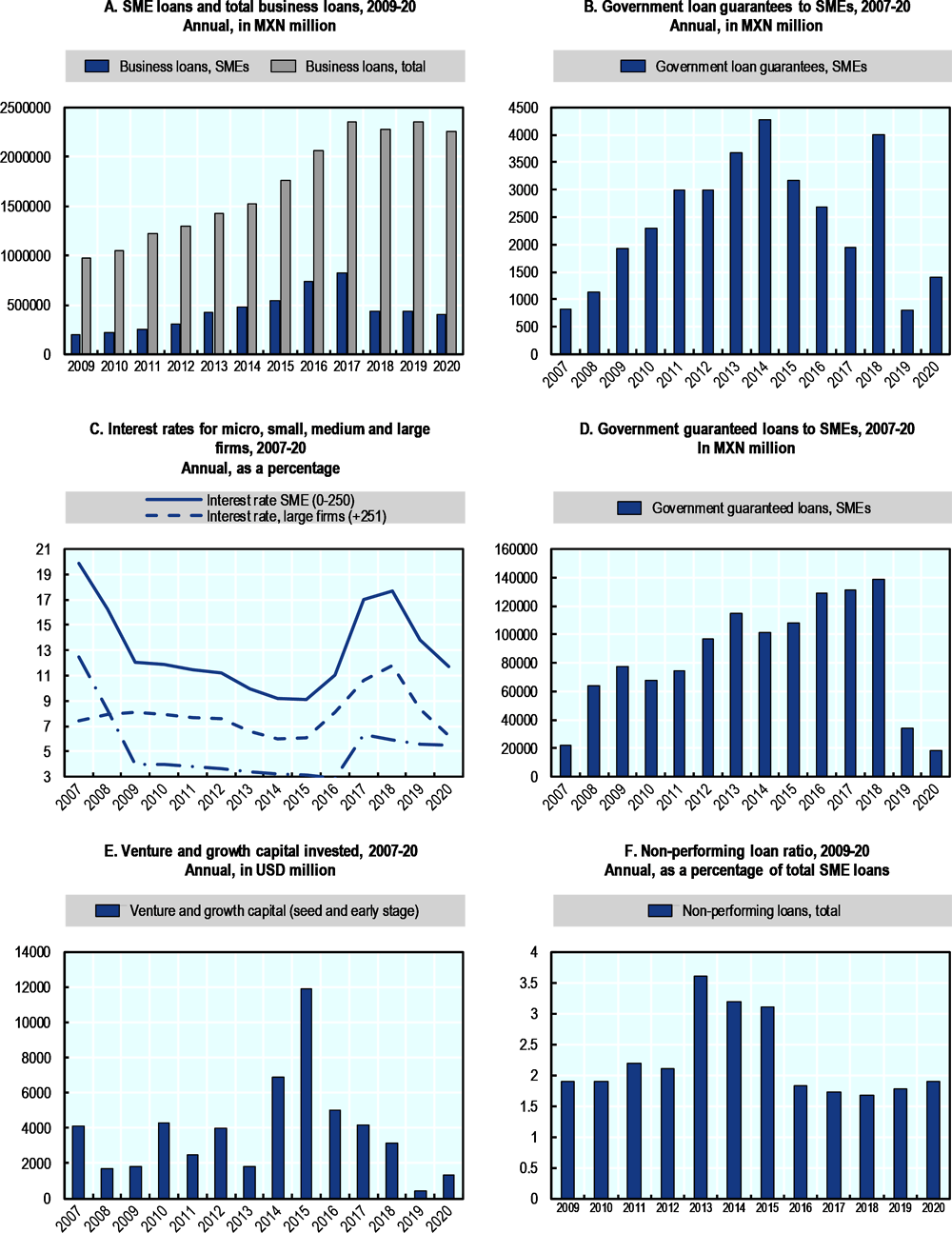
The Mexican government has also played a crucial role in fostering entrepreneurship by implementing various policies and initiatives aimed at supporting small and medium-sized enterprises (SMEs). Programs like the National Institute of the Entrepreneur (El Instituto Nacional del Emprendedor INADEM) and the establishment of technology parks and business incubators have provided essential resources and funding to budding entrepreneurs. Additionally, the rise of venture capital firms and angel investors in Mexico has created a more vibrant ecosystem, enabling startups to secure the necessary financial backing to scale their operations.

Looking to the future, the prospects for entrepreneurship in Mexico appear promising. The continued expansion of internet connectivity and the increasing adoption of smartphones are expected to further drive digital entrepreneurship. Moreover, the growing emphasis on sustainable development and social impact is likely to lead to the emergence of startups focused on addressing environmental and societal challenges. As Mexico continues to integrate more deeply into the global economy, the country’s entrepreneurs will have greater opportunities to collaborate with international partners, access new markets, and bring their innovative solutions to a wider audience.

However, challenges remain. Entrepreneurs in Mexico still face hurdles such as bureaucratic red tape, limited access to credit, and occasional political and economic instability. To sustain and accelerate the growth of entrepreneurship, it will be essential for both the public and private sectors to continue working together to create an enabling environment. This includes streamlining regulatory processes, improving access to financing, and investing in education and skills development to prepare the next generation of entrepreneurs. With the right support and a continued focus on innovation, entrepreneurship in Mexico is poised to thrive and contribute significantly to the country’s economic development.

The Mexican government has developed a variety of resources and programs aimed at supporting entrepreneurship and fostering a conducive environment for startups and small businesses. Some of the key initiatives include:

  1. Instituto Nacional del Emprendedor (INADEM):
    • INADEM was established to promote and support entrepreneurship and innovation. It offers financial support, training, and resources to startups and small businesses.
    • The institute runs various programs such as the Seed Capital Program, which provides funding for new ventures, and the Entrepreneurial Ecosystem Support Program, which focuses on creating a supportive environment for entrepreneurs.
  2. Fondo Nacional de Apoyo para las Empresas en Solidaridad (FONAES):
    • FONAES provides financial assistance and advisory services to socially-oriented businesses and cooperatives, particularly in rural and marginalized areas.
    • The fund aims to boost economic development and create job opportunities by supporting community-based enterprises.
  3. ProMéxico:
    • Although primarily focused on promoting international trade and investment, ProMéxico also supports entrepreneurs by providing access to global markets and facilitating international partnerships.
    • ProMéxico offers training programs, trade missions, and networking opportunities to help Mexican businesses expand globally.
  4. Fondo de Innovación Tecnológica (FIT):
    • Managed by the National Council of Science and Technology (CONACYT), FIT provides grants and funding to support technological innovation and research and development (R&D) projects.
    • The fund targets high-impact projects that can drive economic growth and competitiveness.
  5. Red de Apoyo al Emprendedor (RAE):
    • RAE is a network that connects entrepreneurs with a range of services and resources, including mentoring, training, and funding opportunities.
    • The network comprises various stakeholders, including government agencies, private sector entities, and academic institutions, working together to support entrepreneurial ventures.
  6. Startup México:
    • Startup México is an initiative that provides incubation and acceleration programs for startups. It offers co-working spaces, mentorship, and access to a network of investors and industry experts.
    • The program focuses on fostering innovation and helping startups scale their businesses.
  7. National Entrepreneur Fund (Fondo Nacional Emprendedor):
    • This fund provides financial support to micro, small, and medium-sized enterprises (MSMEs) to promote innovation, productivity, and competitiveness.
    • The fund offers various grants and subsidies to support business development, technological adoption, and market expansion.
  8. TiendaNube and other E-commerce Support Programs:
    • In collaboration with various platforms like TiendaNube, the government supports SMEs in setting up and managing online stores, thereby helping them tap into the growing e-commerce market.
    • These programs often include training in digital marketing, logistics, and customer service.

These programs and resources reflect the Mexican government’s commitment to fostering a vibrant entrepreneurial ecosystem. By providing financial support, training, and access to networks and markets, these initiatives aim to empower entrepreneurs, drive innovation, and contribute to the country’s economic growth.

For more information about Investing and Entrepreneurship in Mexico sign up to for our Newsletter.
Also Join Our Investors and Entrepreneurs – Mexico Community on Facebook, with over 3,000 members, and our Financial Liberties in Mexico FaceBook page.

Financial Liberties in Mexico Newsletter This is your premier source for the latest insights and trends in the Mexican financial landscape. Whether you’re an investor, entrepreneur, or simply interested in the economic opportunities in Mexico, our newsletter provides you with the essential information you need to navigate this dynamic market with confidence.  Get Economic Insights About Mexico, Banking Updates, Stock Market Analysis, Real Estate Opportunities, Entrepreneurship and Innovation. Once you complete the purchase, you will be able to download the General Intro To The Financial Liberties Newsletter, this PDF file contains an overview of what subscribers can expect from our Newsletter.  You will then be added to the subscriber email list and start receiving the newsletter by email, or be given access to a private Google Drive folder where you can download the newsletters and special reports included with this purchase.  Disclaimer:  Please read the full Disclaimer in our Terms of Service Page The content provided by Financial Liberties and in our Newsletter, Special Reports, Webinars, and Consutling is for informational and educational purposes only and does not constitute financial, investment, legal, or other professional advice. Financial Liberties and operators are not financial advisors, and the content on this site and our media outlets should not be considered a substitute for professional financial advice tailored to your specific circumstances. Always seek the advice of a qualified financial advisor with any questions you may have regarding financial decisions. Financial Liberties, its affiliates, and their respective directors, officers, employees, agents, and representatives are not liable for any loss or damage arising from your reliance on the information provided. This includes, but is not limited to, any direct, indirect, incidental, punitive, or consequential damages. You acknowledge that by subscribing to this Newsletter and other media we provide as a part of your subscription, you will use the information at your own risk and we are only sharing our research for educational purposes.
China’s Investment Into Mexico

China’s Investment Into Mexico

China has made more investment in Mexico in the last 8 years than any other country. When US started sanctioning China, they probably didn’t expect them to move to Mexico and bring the manufacturing here. Makes me wonder if Mexico now will become the biggest manufacture of goods in the western hemisphere.

Germany manufacturing companies have also moved here and I suspect this trend will continue as more countries plant flags in Mexico.
Mexico is cheaper on transportation to western markets, and labor costs are lower than China… let alone the US, Canada and Europe. It has better demographics than most nations, with a large middle class that also is going to spend more as incomes rise here.
For those who think the Peso will go back to 20 for each USD, I don’t suspect that will happen again, the best you can hope for is maybe back to 18.50, and at 16.50 their could be more down side for the USD as the fundamentals for a strong Mexican economy continue.

The only wrench that can come in the Mexico growth and strong peso trend is if the US starts sanctioning Mexico, which Trump is talking about, or the US military enters Mexico to stop the cartel drug war. Both of these things are being talked about, so I am not ruling them out… but until this happens, Mexico will continue to benefit from FDI, near-shoring and the Peso could find solid footing here.

Sanctions never worked on China, nor did it work on Russia, so the US sanctioning Mexico will most likely back fire here as well. Share your thoughts below, do you think the US will start sanctioning Mexico in the future, and will it work?