The Future of Cryptocurrency: June 2024

The Future of Cryptocurrency: June 2024

As the world continues to grapple with economic uncertainties and shifting financial landscapes, the role of cryptocurrency is becoming more prominent. In recent months, we’ve seen significant developments that suggest a bright future for digital assets. Let’s delve into the current state of the market and explore what lies ahead.

Bitcoin’s Resurgence

Bitcoin has once again proven its resilience, bouncing back from its mid-2023 slump to reach new heights. The leading cryptocurrency recently surpassed the $70,000 mark, driven by renewed institutional interest and increasing mainstream acceptance. The question on everyone’s mind: Will Bitcoin continue its upward trajectory, or are we heading for another period of volatility?  If you seek the answer to this questions, we discuss this in our Newsletter based on fundamental and technical analysis.

Altcoins on the Rise

While Bitcoin grabs the headlines, it’s important not to overlook the impressive performance of various altcoins. Ethereum, with its groundbreaking shift to a proof-of-stake model, is setting new standards for blockchain technology. Meanwhile, lesser-known tokens like Solana and Cardano are gaining traction, offering unique solutions to scalability and transaction speed issues.  What about XRP and Ripple Labs, will this be the standard for transactions globally, or will the other platforms lead the way?

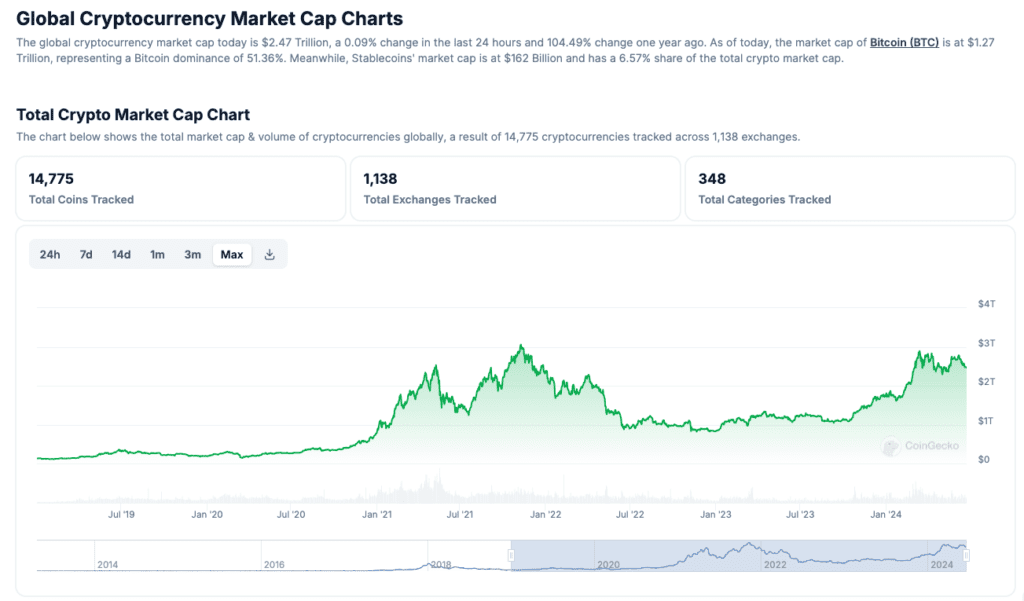
Crypto Market Cap, June 2024

From the chart below, we can see that the overall Market Cap has risen significantly in the past year, this could be a result of the recent introduction of BTC Exchange Traded Funds (ETFs) and the Bitcoin Having that took place in April 2024.  Has all the good news been factored into Bitcoin and could we see a market selloff going into the summer and fall of 2024, or will the overall market cap for Cryptos continue to rise?  Will the introduction of Ethereum ETFs lift the price of ETH and the overall market cap for Cryptos, or has that already been factored into the price and we will have stable prices moving forward?  
 

Regulatory Landscape

The regulatory environment remains a critical factor in the evolution of cryptocurrencies. Recent moves by governments around the world indicate a trend towards greater oversight and regulation. While this could initially slow down market growth, many believe that clear guidelines will ultimately legitimize and stabilize the industry. How will these regulations shape the future of crypto? Will we see more countries adopting crypto-friendly policies, or will crackdowns become more common?

The Role of Central Bank Digital Currencies (CBDCs)

Central banks are also entering the digital currency arena with the development of CBDCs. These government-backed digital currencies aim to combine the benefits of traditional fiat money with the advantages of digital transactions. Countries like China are leading the way, with the digital yuan already in circulation. The introduction of CBDCs raises important questions about the future of decentralized cryptocurrencies and their place in the global financial system.

Advantages of Investing in Cryptocurrencies

  1. High Growth Potential: Cryptocurrencies have shown significant growth over the past decade, with many investors seeing substantial returns. The innovation and adoption in the blockchain space continue to drive this potential.
  2. Diversification: Adding cryptocurrencies to your portfolio can provide diversification, as they often do not correlate directly with traditional asset classes like stocks and bonds.
  3. Inflation Hedge: Cryptocurrencies like Bitcoin are often viewed as a hedge against inflation, as their limited supply can protect against the devaluation of fiat currencies.
  4. Decentralization: The decentralized nature of cryptocurrencies offers an alternative to traditional banking and financial systems, reducing reliance on central authorities.

Disadvantages of Investing in Cryptocurrencies

  1. Volatility: Cryptocurrencies are known for their extreme price volatility, which can lead to significant losses in a short period. This volatility makes them a high-risk investment.
  2. Regulatory Uncertainty: The lack of consistent regulatory frameworks across different countries creates uncertainty. New regulations could impact the value and legality of certain cryptocurrencies.
  3. Security Risks: While blockchain technology is secure, the platforms and exchanges that deal with cryptocurrencies can be vulnerable to hacking and fraud, leading to potential losses.
  4. Market Manipulation: The relatively low market capitalization of many cryptocurrencies makes them susceptible to market manipulation, where prices can be artificially influenced by large holders or coordinated groups.

Investment Opportunities

For those looking to capitalize on the growing crypto market, now is the time to pay attention. Diversification remains key, with a balanced portfolio of Bitcoin, top-performing altcoins, and emerging tokens offering the best potential for long-term gains. Additionally, keeping an eye on regulatory changes and technological advancements will be crucial for making informed investment decisions.

Conclusion

The cryptocurrency market is evolving rapidly, and staying informed is more important than ever. As Bitcoin and other digital assets continue to mature, their role in the financial system will only grow. Whether you’re a seasoned investor or new to the world of crypto, understanding the trends and dynamics at play will help you navigate this exciting and unpredictable landscape.

Stay tuned for more updates and in-depth analysis in the Financial Liberties Newsletter. If you haven’t subscribed yet, don’t miss out on our special offer running until the end of July. We’re committed to providing you with the insights and information you need to stay ahead in the ever-changing world of finance.

Understanding Stablecoins: The Backbone of Crypto Stability

Understanding Stablecoins: The Backbone of Crypto Stability

In the ever-evolving world of cryptocurrency, stablecoins have emerged as a crucial component, bridging the gap between the volatility of digital currencies and the stability of traditional fiat money. This blog delves into what stablecoins are, the different types available, their uses, their value, and their potential future in finance and commerce.

What is a Stablecoin?

A stablecoin is a type of cryptocurrency designed to maintain a stable value relative to a specific asset or a basket of assets. Unlike traditional cryptocurrencies like Bitcoin or Ethereum, whose prices can be highly volatile, stablecoins aim to offer price stability. They achieve this by being pegged to more stable assets such as fiat currencies (e.g., USD, EUR), commodities (e.g., gold), or even other cryptocurrencies.

Types of Stablecoins

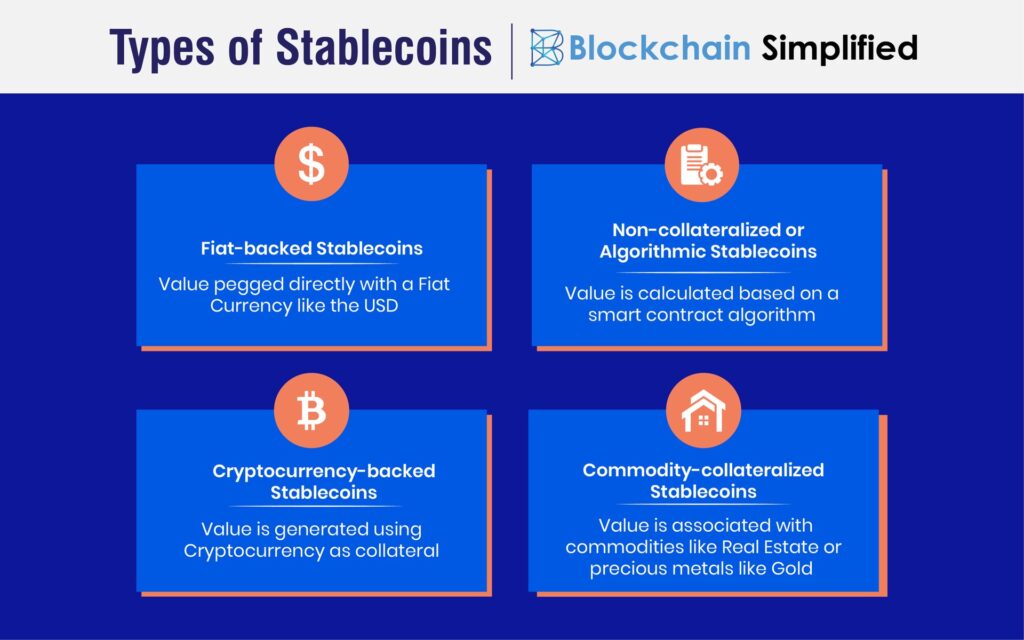
Stablecoins can be broadly categorized into four main types based on the mechanisms they use to maintain their stability:

  1. Fiat-Collateralized Stablecoins
    • These stablecoins are backed by a reserve of fiat currency. For every unit of stablecoin issued, an equivalent amount of fiat currency is held in reserve. Examples include Tether (USDT), USD Coin (USDC), and TrueUSD (TUSD).
  2. Crypto-Collateralized Stablecoins
    • These are backed by other cryptocurrencies. To account for the volatility of the backing cryptocurrency, these stablecoins are often over-collateralized. An example is DAI, which is backed by Ethereum and other cryptocurrencies.
  3. Commodity-Collateralized Stablecoins
    • These stablecoins are backed by physical assets like gold or real estate. One example is Paxos Gold (PAXG), which is backed by physical gold.
  4. Algorithmic Stablecoins
    • Unlike the other types, algorithmic stablecoins are not backed by any collateral. Instead, they use algorithms and smart contracts to control the supply of the stablecoin, aiming to keep its value stable. Examples include Ampleforth (AMPL) and TerraUSD (UST).

Uses of Stablecoins

Stablecoins have a variety of uses in the cryptocurrency ecosystem and beyond:

  1. Trading and Hedging
    • Stablecoins provide a safe haven for traders during periods of high volatility. They allow traders to quickly move in and out of volatile assets without converting to fiat currency, saving time and reducing transaction fees.
  2. Remittances and Payments
    • Due to their stable value and low transaction fees, stablecoins are increasingly used for cross-border payments and remittances. They offer a faster and cheaper alternative to traditional banking systems.
  3. Decentralized Finance (DeFi)
    • Stablecoins are widely used in DeFi applications for lending, borrowing, and earning interest. Their stable value makes them ideal for these financial services.
  4. Merchant Transactions
    • Some merchants accept stablecoins as payment, leveraging their stability to avoid the price swings associated with other cryptocurrencies.

The Future of Stablecoins in Finance and Commerce

The future of stablecoins looks promising, with several potential developments on the horizon:

  1. Regulatory Clarity
    • As governments and regulatory bodies become more familiar with stablecoins, clearer regulatory frameworks are expected to emerge. This will likely enhance trust and adoption among both consumers and businesses.
  2. Integration with Traditional Finance
    • Stablecoins are likely to become more integrated with traditional financial systems. This could include partnerships with banks, integration into payment systems, and acceptance by more merchants.
  3. Expansion of Use Cases
    • Beyond payments and trading, stablecoins could find new use cases in areas like supply chain finance, real estate, and even tokenized equity. Their potential to streamline transactions and reduce costs is immense.
  4. Innovation in DeFi
    • The DeFi space will continue to innovate, with stablecoins playing a crucial role in new financial products and services. This could include more sophisticated lending platforms, insurance products, and investment opportunities.
  5. Global Financial Inclusion
    • Stablecoins have the potential to provide financial services to unbanked and underbanked populations around the world. By leveraging mobile technology, they can offer a stable and accessible means of saving, transferring, and spending money.

The Value of a Stablecoin

The value of a stablecoin lies in its ability to offer the best of both worlds: the stability of traditional fiat currencies and the efficiency, transparency, and security of cryptocurrencies. This stability makes them an attractive option for both investors and businesses looking to minimize risk while still participating in the digital economy.

In conclusion, stablecoins represent a significant advancement in the cryptocurrency space, offering stability in an otherwise volatile market. Their uses are diverse, and their potential impact on global finance and commerce is profound. As the technology and regulatory landscape evolve, stablecoins are poised to play an increasingly important role in the financial ecosystem.

End Of The Petrodollar – 50 Years Later

End Of The Petrodollar – 50 Years Later

50 years ago, the US signed a deal with the Saudis to accept USD for their oil… this agreement is coming to an end this Sunday, June 9th, 2024, and thus could be the end of the Petrodollar.

The question is, will the Saudis renew? From all indications, no they will not renew the contract going forward. This means the Saudis are willing to accept other nations’ currencies or Gold as payment, and they are looking to BRICS for alliances.

Yes the US is now a big producer of Oil and Natural Gas, but that’s not enough to sustain the world currency reserve status.  The Saudis and OPEC could easily drop oil prices to $40 a barrel and still make money, US fracking needs a much higher price to be sustainable. The fact is, the Saudis will most likely join BRICS, and their oil (and Russia’s oil) is more than enough to supply all the BRICS nations.  Oil could be used to support and back up the Saudi currency, and the same goes for UAE, which also has joined BRICS recently.


BRICS are moving away from the Dollar and will soon trade amongst themselves in their own country’s currencies, and other assets like GOLD and other commodities.

For 50 years, the USD had a global advantage over all other currencies and they abused it over the last decade, that dominance has given the US an unfair competitive advantage. Nations around the world are dropping the dollar like a hot potato and that trend only accelerates going forward.

I can’t see any reason for the world to stay on the dollar standard as the world currency reserve. The World is moving on and the USD is no longer a strong currency to be a reserve… which is why GOLD will stay strong and in demand during this transition period.

What Was the Petrodollar?

The term “petrodollar” refers to U.S. dollars that are earned by countries through the sale of their oil to other nations. The concept emerged in the early 1970s when the U.S. struck a deal with Saudi Arabia. In exchange for military protection and other security guarantees, Saudi Arabia agreed to sell its oil exclusively in U.S. dollars. Eventually, this arrangement extended to other OPEC (Organization of Petroleum Exporting Countries) nations. This system created a substantial demand for the U.S. dollar since countries needed dollars to buy oil.

Was the Petrodollar Good for the World?

The petrodollar system had several impacts:

Stability and Liquidity: The system provided global financial stability and liquidity. The high demand for U.S. dollars due to oil transactions supported the dollar’s value, reducing currency volatility

Economic Growth: It facilitated economic growth and trade. Countries holding large reserves of U.S. dollars could invest in U.S. assets, fueling global economic integration.

Power Dynamics: It reinforced U.S. economic and geopolitical influence, which could be seen as either beneficial or detrimental depending on the perspective.

Global Imbalances: It contributed to global imbalances, with the U.S. running large trade deficits financed by foreign investments in U.S. assets.

Will We Go Off the Petrodollar Standard?

There is increasing speculation about the end of the petrodollar system due to various factors:

Economic Shifts: The rise of other economic powers like China and the European Union could reduce the dominance of the U.S. dollar.

Alternative Currencies: Some countries are exploring alternative currencies for oil transactions. For example, Russia and China have been conducting some oil trades in rubles and yuan.

Cryptocurrencies and Digital Currencies: The emergence of digital currencies could provide alternatives to traditional currency systems.

Geopolitical Tensions: Rising geopolitical tensions might push some countries to seek alternatives to the U.S. dollar to avoid economic sanctions.

Benefits of Going Off the Petrodollar Standard

Diversification: Diversifying currency reserves could reduce dependency on a single currency, mitigating risks associated with dollar fluctuations.

 Economic Independence: Countries might gain more economic independence, reducing their vulnerability to U.S. economic policies and sanctions.

Enhanced Stability: A more balanced global currency system could potentially lead to greater economic stability.

Better Alternatives to the Petrodollar Standard

Multicurrency System: A system where multiple currencies are used for international trade could reduce reliance on any single currency, promoting global economic stability.

Special Drawing Rights (SDRs): The International Monetary Fund’s (IMF) SDRs could serve as a global reserve asset, providing a more balanced and stable global financial system.

Digital Currencies: Central bank digital currencies (CBDCs) could provide secure and efficient alternatives for international transactions.

Role of Gold in the Petrodollar System

Gold could potentially play several roles:

Store of Value: Gold has historically been a reliable store of value, providing stability in times of economic uncertainty.

Currency Backing: Countries could use gold to back their currencies, enhancing confidence in those currencies.

Diversification: Holding gold as part of currency reserves can diversify assets and reduce reliance on any single currency.

Conclusion

The petrodollar system has been a significant factor in global economics and geopolitics since the 1970s. While it has provided stability and growth, there are increasing discussions about moving away from this system due to shifts in global power, economic interests, and technological advancements. Alternatives like a multicurrency system, SDRs, and digital currencies are being considered. Gold remains a viable asset for diversification and stability in any future financial system.

Got GOLD Yet? If no, and you want to learn more about gold investing, We will be covering gold and commodities extensively in the Financial Liberties Newsletter.  Want to buy physical or digital gold, get our special report on Gold.