Understanding Stablecoins: The Backbone of Crypto Stability

Understanding Stablecoins: The Backbone of Crypto Stability

In the ever-evolving world of cryptocurrency, stablecoins have emerged as a crucial component, bridging the gap between the volatility of digital currencies and the stability of traditional fiat money. This blog delves into what stablecoins are, the different types available, their uses, their value, and their potential future in finance and commerce.

What is a Stablecoin?

A stablecoin is a type of cryptocurrency designed to maintain a stable value relative to a specific asset or a basket of assets. Unlike traditional cryptocurrencies like Bitcoin or Ethereum, whose prices can be highly volatile, stablecoins aim to offer price stability. They achieve this by being pegged to more stable assets such as fiat currencies (e.g., USD, EUR), commodities (e.g., gold), or even other cryptocurrencies.

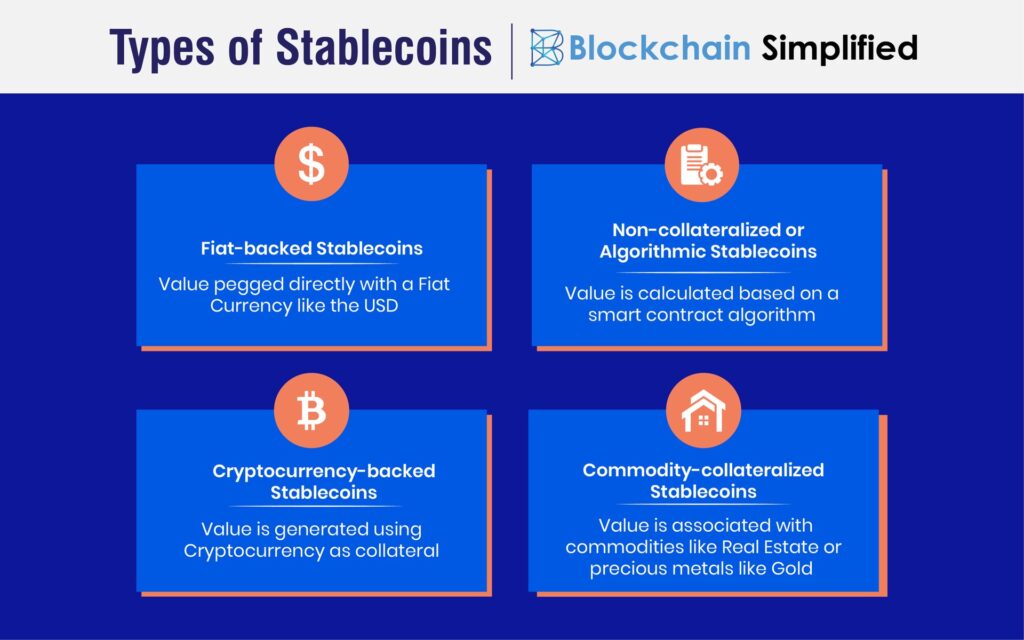
Types of Stablecoins

Stablecoins can be broadly categorized into four main types based on the mechanisms they use to maintain their stability:

  1. Fiat-Collateralized Stablecoins
    • These stablecoins are backed by a reserve of fiat currency. For every unit of stablecoin issued, an equivalent amount of fiat currency is held in reserve. Examples include Tether (USDT), USD Coin (USDC), and TrueUSD (TUSD).
  2. Crypto-Collateralized Stablecoins
    • These are backed by other cryptocurrencies. To account for the volatility of the backing cryptocurrency, these stablecoins are often over-collateralized. An example is DAI, which is backed by Ethereum and other cryptocurrencies.
  3. Commodity-Collateralized Stablecoins
    • These stablecoins are backed by physical assets like gold or real estate. One example is Paxos Gold (PAXG), which is backed by physical gold.
  4. Algorithmic Stablecoins
    • Unlike the other types, algorithmic stablecoins are not backed by any collateral. Instead, they use algorithms and smart contracts to control the supply of the stablecoin, aiming to keep its value stable. Examples include Ampleforth (AMPL) and TerraUSD (UST).

Uses of Stablecoins

Stablecoins have a variety of uses in the cryptocurrency ecosystem and beyond:

  1. Trading and Hedging
    • Stablecoins provide a safe haven for traders during periods of high volatility. They allow traders to quickly move in and out of volatile assets without converting to fiat currency, saving time and reducing transaction fees.
  2. Remittances and Payments
    • Due to their stable value and low transaction fees, stablecoins are increasingly used for cross-border payments and remittances. They offer a faster and cheaper alternative to traditional banking systems.
  3. Decentralized Finance (DeFi)
    • Stablecoins are widely used in DeFi applications for lending, borrowing, and earning interest. Their stable value makes them ideal for these financial services.
  4. Merchant Transactions
    • Some merchants accept stablecoins as payment, leveraging their stability to avoid the price swings associated with other cryptocurrencies.

The Future of Stablecoins in Finance and Commerce

The future of stablecoins looks promising, with several potential developments on the horizon:

  1. Regulatory Clarity
    • As governments and regulatory bodies become more familiar with stablecoins, clearer regulatory frameworks are expected to emerge. This will likely enhance trust and adoption among both consumers and businesses.
  2. Integration with Traditional Finance
    • Stablecoins are likely to become more integrated with traditional financial systems. This could include partnerships with banks, integration into payment systems, and acceptance by more merchants.
  3. Expansion of Use Cases
    • Beyond payments and trading, stablecoins could find new use cases in areas like supply chain finance, real estate, and even tokenized equity. Their potential to streamline transactions and reduce costs is immense.
  4. Innovation in DeFi
    • The DeFi space will continue to innovate, with stablecoins playing a crucial role in new financial products and services. This could include more sophisticated lending platforms, insurance products, and investment opportunities.
  5. Global Financial Inclusion
    • Stablecoins have the potential to provide financial services to unbanked and underbanked populations around the world. By leveraging mobile technology, they can offer a stable and accessible means of saving, transferring, and spending money.

The Value of a Stablecoin

The value of a stablecoin lies in its ability to offer the best of both worlds: the stability of traditional fiat currencies and the efficiency, transparency, and security of cryptocurrencies. This stability makes them an attractive option for both investors and businesses looking to minimize risk while still participating in the digital economy.

In conclusion, stablecoins represent a significant advancement in the cryptocurrency space, offering stability in an otherwise volatile market. Their uses are diverse, and their potential impact on global finance and commerce is profound. As the technology and regulatory landscape evolve, stablecoins are poised to play an increasingly important role in the financial ecosystem.

Texas Stock Exchange TXSE Coming Soon

Texas Stock Exchange TXSE Coming Soon

The Wild West Of Fintech.

Texas has long embodied a spirit of bold independence and pioneering innovation, rooted in a deep ethos of self-reliance. From its early days as a republic to its contemporary status as a business-friendly powerhouse, the Lone Star State has continuously charted its own course. Reflecting this legacy, a group of enterprising Texan entrepreneurs, led by James Lee and backed by financial heavyweights BlackRock and Citadel Securities, is positioning Dallas and Texas as strategic financial market leaders with the launch of the Texas Stock Exchange (TSXE). Having secured over $100 million in funding from major financial market participants, including BlackRock and Citadel, Lee’s vision is to establish a Texas-based competitor to the NYSE and NASDAQ.

The creation of the Texas Stock Exchange underscores the state’s enduring commitment to innovation and competition, aiming to boost liquidity and transparency in the financial markets while solidifying Texas’ role as a key economic hub.

TSXE To Boost Market Efficiency

A primary objective of the Texas Stock Exchange is to deliver greater liquidity and transparency. By harnessing advanced technologies and data analytics, the TSXE aims to provide more consistent and reliable markets, attracting a diverse array of market participants from institutional investors to retail traders, thereby enhancing overall market depth.

Transparency is crucial in today’s market environment. The TSXE’s strong commitment to transparency seeks to rebuild trust in financial markets, facilitating fairer price discovery and mitigating risks of market manipulation. This ensures a level playing field for all participants.

Why Texas: The Ideal Hub

The decision to base the new exchange in Texas is strategic. The state is renowned for its business-friendly environment and a regulatory framework that encourages innovation and growth. Additionally, Texas’s central location offers logistical advantages, making it an ideal hub for market activities across various U.S. time zones.

The presence of established financial entities such as Fidelity and Schwab in Texas further bolsters the state’s financial ecosystem. These companies can provide valuable synergies and support, aiding in the integration and growth of the new exchange.

TSXE Strategic Advantages

The introduction of the Texas Stock Exchange is poised to benefit the broader financial markets significantly. Increased competition among exchanges can lead to improved services and lower costs for market participants. With BlackRock and Citadel Securities involved, the TSX brings substantial credibility and expertise, which can drive innovation and best practices within the industry.

Moreover, the enhanced liquidity and transparency promised by the TSXE can contribute to more efficient and fair markets. Investors are likely to see better price discovery and reduced risks of market manipulation, creating a healthier trading environment. The TSXE’s commitment to these principles can inspire other exchanges to adopt similar standards, fostering a more robust financial system.

Will the TSXE Overcome Obstacles

Despite promising prospects, the Texas Stock Exchange will face significant challenges. Obtaining regulatory approval from bodies like the SEC will be a critical initial step. The exchange must demonstrate robust compliance frameworks and a commitment to market integrity to gain the trust of regulators and market participants.

Market fragmentation poses another risk. With numerous trading venues available, there is a danger of liquidity being spread too thin, leading to inefficiencies. To avoid this, the new exchange must offer compelling value propositions to attract sufficient volume.

TSXE Future Vision

The Texas Stock Exchange represents a visionary move towards more competitive, transparent, and efficient financial markets. If successful, it could prompt incumbent exchanges to elevate their standards, driving continuous improvement across the industry. For investors, the benefits are clear: enhanced market conditions, potentially lower costs, and innovative trading solutions.

Challenging the dominant NYSE and NASDAQ, the two largest players in the U.S. equities trading market, will be an uphill battle. However, Texas is known for its bold independence and pioneering spirit. The success of the Texas Stock Exchange will depend on navigating regulatory landscapes, building trust, and leveraging the state’s unique strategic advantages. With the support of BlackRock and Citadel Securities, the TSXE is well-positioned to make a significant impact on the financial markets, fostering a more competitive and transparent trading environment.

https://www.reuters.com/markets/us/blackrock-citadel-backed-group-start-new-national-stock-exchange-texas-wsj-2024-06-05/

The Future of Digital Asset Ownership

The Future of Digital Asset Ownership

The digital world is rapidly evolving, and with it comes a significant shift in how we understand and manage asset ownership. The integration of digital ledger technology (DLT), tokenization, and smart contracts is poised to revolutionize asset ownership, purchase, and sale. This article explores these innovations and underscores the importance of embracing and preparing for this transformative era.

Digital Ledger Technology: The Backbone of Digital Ownership

Digital ledger technology, commonly known as blockchain, provides a decentralized and immutable record of transactions. It ensures transparency, security, and efficiency, making it ideal for managing digital assets. Unlike traditional ledgers maintained by central authorities, blockchain operates on a distributed network of computers, where each participant has a copy of the ledger. This decentralized nature eliminates the risk of single points of failure and enhances trust among participants.

Tokenization of Assets

Tokenization is the process of converting physical or digital assets into digital tokens on a blockchain. These tokens represent ownership or a stake in the underlying asset and can be easily transferred or traded on digital platforms. Tokenization offers several advantages:

  1. Fractional Ownership: It enables the division of assets into smaller units, allowing more people to invest in high-value assets like real estate, art, or expensive collectibles.
  2. Liquidity: Tokenized assets can be traded on secondary markets, increasing liquidity and providing investors with easier entry and exit points.
  3. Accessibility: By lowering the barriers to entry, tokenization democratizes access to investment opportunities, making them available to a broader audience.

Smart Contracts: Automating Transactions

Smart contracts are self-executing contracts with the terms of the agreement directly written into code. They automatically enforce and execute contractual agreements when predefined conditions are met. In the realm of digital asset ownership, smart contracts offer several benefits:

  1. Efficiency: They eliminate the need for intermediaries, reducing transaction costs and speeding up processes.
  2. Transparency: Since smart contracts operate on a blockchain, all parties can view the contract’s terms and the transaction history, enhancing transparency.
  3. Security: The immutable nature of blockchain ensures that once a smart contract is deployed, it cannot be altered, providing security and trust in the execution of agreements.

The Importance of Embracing Digital Asset Ownership

As digital ledger technology, tokenization, and smart contracts become more prevalent, understanding these concepts becomes crucial for several reasons:

  1. Economic Opportunities: The digital asset market is growing rapidly, offering new investment opportunities and financial instruments. Being knowledgeable about this space can help individuals and businesses capitalize on these opportunities.
  2. Competitive Advantage: Early adopters of these technologies will have a competitive edge in various industries, from finance to real estate to supply chain management.
  3. Innovation and Efficiency: Embracing digital asset ownership can lead to more innovative and efficient business models, reducing costs and improving service delivery.

Preparing for the Digital Asset Revolution

To prepare for this paradigm shift, individuals and businesses should take the following steps:

  1. Education: Invest time in learning about blockchain technology, tokenization, and smart contracts through courses, webinars, and industry reports.
  2. Experimentation: Engage in hands-on experimentation by participating in blockchain projects, buying and trading digital assets, or developing smart contracts.
  3. Networking: Join communities, attend conferences, and connect with industry experts to stay updated on the latest developments and trends.
  4. Regulatory Awareness: Stay informed about the regulatory landscape surrounding digital assets to ensure compliance and understand the legal implications.

Conclusion

The future of digital asset ownership is bright, with digital ledger technology, tokenization, and smart contracts at the forefront of this transformation. By understanding and embracing these innovations, individuals and businesses can unlock new economic opportunities, gain a competitive advantage, and drive innovation. Preparing for this new paradigm is essential, and it starts with education, experimentation, and staying informed about the ever-evolving digital asset landscape.

To learn more about Digital Asset Ownership visit the DAUEX website.

The dawn of Digital Asset ownership is upon us, it is up to you to reach out and embrace the new world of Fintech or get left behind in the failing legacy financial system…