
The Future of Cryptocurrency: June 2024
As the world continues to grapple with economic uncertainties and shifting financial landscapes, the role of cryptocurrency is becoming more prominent. In recent months, we’ve seen significant developments that suggest a bright future for digital assets. Let’s delve into the current state of the market and explore what lies ahead.
Bitcoin’s Resurgence
Bitcoin has once again proven its resilience, bouncing back from its mid-2023 slump to reach new heights. The leading cryptocurrency recently surpassed the $70,000 mark, driven by renewed institutional interest and increasing mainstream acceptance. The question on everyone’s mind: Will Bitcoin continue its upward trajectory, or are we heading for another period of volatility? If you seek the answer to this questions, we discuss this in our Newsletter based on fundamental and technical analysis.
Altcoins on the Rise
While Bitcoin grabs the headlines, it’s important not to overlook the impressive performance of various altcoins. Ethereum, with its groundbreaking shift to a proof-of-stake model, is setting new standards for blockchain technology. Meanwhile, lesser-known tokens like Solana and Cardano are gaining traction, offering unique solutions to scalability and transaction speed issues. What about XRP and Ripple Labs, will this be the standard for transactions globally, or will the other platforms lead the way?
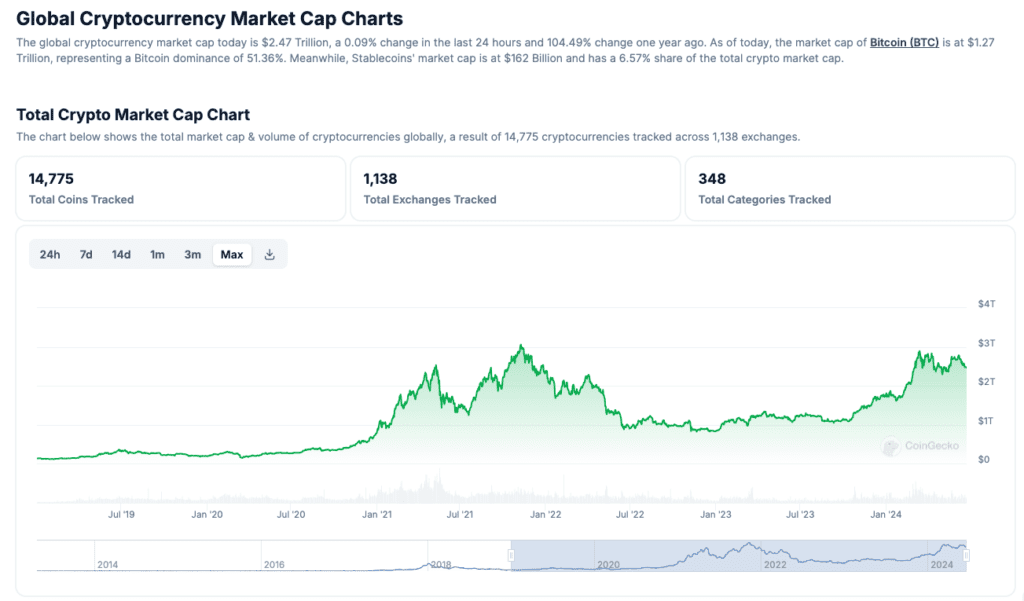
Crypto Market Cap, June 2024
From the chart below, we can see that the overall Market Cap has risen significantly in the past year, this could be a result of the recent introduction of BTC Exchange Traded Funds (ETFs) and the Bitcoin Having that took place in April 2024. Has all the good news been factored into Bitcoin and could we see a market selloff going into the summer and fall of 2024, or will the overall market cap for Cryptos continue to rise? Will the introduction of Ethereum ETFs lift the price of ETH and the overall market cap for Cryptos, or has that already been factored into the price and we will have stable prices moving forward?
Regulatory Landscape
The regulatory environment remains a critical factor in the evolution of cryptocurrencies. Recent moves by governments around the world indicate a trend towards greater oversight and regulation. While this could initially slow down market growth, many believe that clear guidelines will ultimately legitimize and stabilize the industry. How will these regulations shape the future of crypto? Will we see more countries adopting crypto-friendly policies, or will crackdowns become more common?
The Role of Central Bank Digital Currencies (CBDCs)
Central banks are also entering the digital currency arena with the development of CBDCs. These government-backed digital currencies aim to combine the benefits of traditional fiat money with the advantages of digital transactions. Countries like China are leading the way, with the digital yuan already in circulation. The introduction of CBDCs raises important questions about the future of decentralized cryptocurrencies and their place in the global financial system.

Advantages of Investing in Cryptocurrencies
- High Growth Potential: Cryptocurrencies have shown significant growth over the past decade, with many investors seeing substantial returns. The innovation and adoption in the blockchain space continue to drive this potential.
- Diversification: Adding cryptocurrencies to your portfolio can provide diversification, as they often do not correlate directly with traditional asset classes like stocks and bonds.
- Inflation Hedge: Cryptocurrencies like Bitcoin are often viewed as a hedge against inflation, as their limited supply can protect against the devaluation of fiat currencies.
- Decentralization: The decentralized nature of cryptocurrencies offers an alternative to traditional banking and financial systems, reducing reliance on central authorities.
Disadvantages of Investing in Cryptocurrencies
- Volatility: Cryptocurrencies are known for their extreme price volatility, which can lead to significant losses in a short period. This volatility makes them a high-risk investment.
- Regulatory Uncertainty: The lack of consistent regulatory frameworks across different countries creates uncertainty. New regulations could impact the value and legality of certain cryptocurrencies.
- Security Risks: While blockchain technology is secure, the platforms and exchanges that deal with cryptocurrencies can be vulnerable to hacking and fraud, leading to potential losses.
- Market Manipulation: The relatively low market capitalization of many cryptocurrencies makes them susceptible to market manipulation, where prices can be artificially influenced by large holders or coordinated groups.
Investment Opportunities
For those looking to capitalize on the growing crypto market, now is the time to pay attention. Diversification remains key, with a balanced portfolio of Bitcoin, top-performing altcoins, and emerging tokens offering the best potential for long-term gains. Additionally, keeping an eye on regulatory changes and technological advancements will be crucial for making informed investment decisions.
Conclusion
The cryptocurrency market is evolving rapidly, and staying informed is more important than ever. As Bitcoin and other digital assets continue to mature, their role in the financial system will only grow. Whether you’re a seasoned investor or new to the world of crypto, understanding the trends and dynamics at play will help you navigate this exciting and unpredictable landscape.
Stay tuned for more updates and in-depth analysis in the Financial Liberties Newsletter. If you haven’t subscribed yet, don’t miss out on our special offer running until the end of July. We’re committed to providing you with the insights and information you need to stay ahead in the ever-changing world of finance.